1. Recon the signs
Spend the first walk reading, not carrying. Your server's maps, category signs, and nameplates are the ground truth — the planner's ten labels are the documented vocabulary, but your room decides the order.
No official fastest route exists — so this page gives you the two things that beat one: the planning method from the game's documented mechanics, and a checklist tool to run it solo or split it across a co-op team.
Searching for a “fastest route” in Clean the Manga Shop! returns claims nobody can source, because the creator has published no route, no timings, and the shop's sign layout is what your server actually follows. The honest version is better anyway: the game officially tests matching under a clock, and matching speed comes from method, not a magic path. The method is three rules — read before you carry (maps, category signs, nameplates), carry batches with the cycle binding so each walk moves several volumes, and drop the moment a match turns uncertain (Q / B-Circle) instead of parking in an aisle. Set your order before the round, work it against the clock, and improve the plan after each run — the planner below exists to make that loop deliberate.
Choose a mode, then add labels in the order you want to handle them. This keeps your order; it does not calculate a fastest route, time, distance, score, or leaderboard result.
Grounded in the documented loop and the ten-label catalog captured from official media (2026-08-20).
Spend the first walk reading, not carrying. Your server's maps, category signs, and nameplates are the ground truth — the planner's ten labels are the documented vocabulary, but your room decides the order.
Put categories you match instantly first and the confusable ones later. Early clean runs feed the upgrade meter documented in the official loop, which is what buys speed for the hard tail of the shift.
The cycle binding (scroll wheel / RB-R1) is a batching tool: grab same-category runs so every walk shelves several volumes. A plan ordered by shelf adjacency turns each batch into one straight line.
Solo runs die from re-deciding — standing mid-aisle re-reading a nameplate with a volume in hand. The checklist removes that cost: choose the order once, mark completions as you go, and let the remaining count tell you whether to push pace or clean up stragglers. After the run, the sections you marked late are your evidence for what to reorder next time — that feedback loop is what “fastest” actually looks like in a game with a leaderboard.
Servers hold up to 12 players and the game explicitly supports teaming up, so the plan becomes a split. Sections parallelize cleanly; categories minimize searching. Assign each label to a teammate in the planner's note fields, appoint one sweeper for loose floor piles, and agree that an unplaceable volume gets dropped at its nearest sign, never hoarded. The plan is player-defined on purpose — the game has no official roles, so yours is as valid as any guide's.
The creator has published no route, timing, or leaderboard method, and the shop layout can differ between servers, so any single claimed "fastest route" would be invented. What actually makes runs fast is documented: read the signs before carrying, carry batches with the cycle binding, and cut walking with a plan you set before the clock starts.
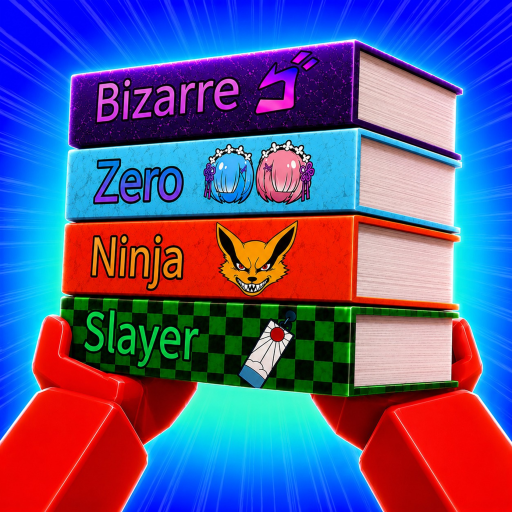
Anchor the order on the categories you recognize fastest — the ten documented labels include easy tells like Ninja, Pirate, and Cyberpunk — then append the ambiguous ones. You get a warm-up ramp: early confident shelving banks upgrades while you still have clock to spend on the harder matches.
Split by visible section first, categories second — sections minimize overlap while categories minimize searching. Give loose floor piles to one sweeper role, and use the planner's assignment notes so nobody shelves a neighbor's label by mistake.
No. It records the order you choose, tracks completions, and holds assignment notes. The game's clock and leaderboard live in the Roblox client; this tool is the paper plan you bring into the run.